The stakes are real. In 2025, 36.8% of surveyed pest control owners and managers said too few technicians held back their growth (Specialty Consultants via NPMA, 2026). Every tech who leaves is a route someone else has to cover while you hire.
The labor picture in numbers
Share of surveyed owners and managers held back by too few technicians, 2025
Share, %Said too few technicians held back their company's growth
| Item | Value | Source |
|---|---|---|
| Said too few technicians held back their company's growth | 36.8% | Specialty Consultants via NPMA, 2026 |
The Bureau of Labor Statistics counts 108,700 pest control worker jobs (2025) and a median pay of $45,250 (May 2025). It projects 6% job growth from 2025 to 2035 and about 13,700 openings a year, many of them to replace workers who leave the job (BLS, 2025). So you hire against the same small pool as every other company in your area. Keeping the techs you have is the cheaper plan.
Seven habits that keep technicians
- 1
Make the day clear before it starts.
Nothing wears a tech down like surprises: a locked gate, a customer who expected someone at 8, a balance nobody mentioned. Before the first stop, each tech should know the gate codes, the pets, the notes from the last visit and which stops need payment. A five-minute briefing at the shop or a printed route sheet with notes works.
- 2
Answer their questions fast.
New techs call the office with the same questions every day: which product for this pest, what the label says about a re-entry interval, what your re-service policy is. Put your protocols, labels and policies in one place they can reach from the truck. Then the office phone rings less and techs feel trusted.
- 3
Give feedback from customers, not gut feel.
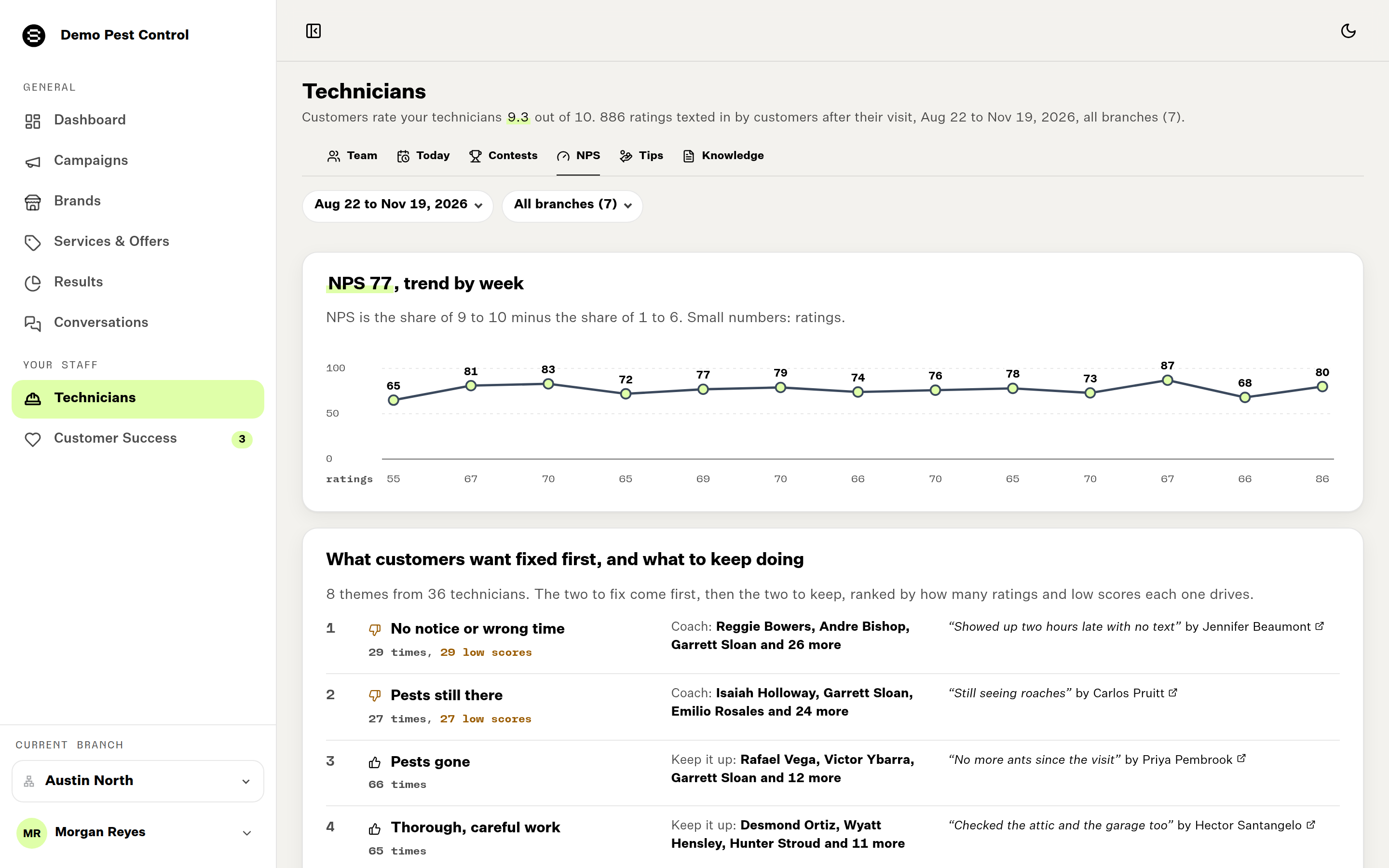
Ask every customer one question after the visit: how likely are they to recommend you, 1 to 10. Work out a score per technician. Share it privately each month, with what customers praised and what they complained about. Feedback a tech can check is feedback a tech can accept.
- 4
Fix complaints fast, and tell the tech.
When a customer is unhappy, call them the same day. Then tell the technician what happened and what you did. Techs leave managers who only show up with bad news. They stay with managers who fix the problem and coach.
- 5
Recognize good work where others can see it.
Name the top techs at the Monday meeting. Run a contest, for example over a month, on something the tech controls, such as customer ratings or jobs done. Pick prizes you can afford each time. Keep it fair across routes and branches.
- 6
Let customers say thank you.
Many customers want to thank a tech who solved their problem. Make it easy and optional, and make sure the money goes to the tech. Read Tipping pest control technicians: how to offer it fairly before you start.
- 7
Make pay and progress visible.
Show each tech what they earned, what bonus they are close to and what the next step is: senior tech, trainer, route lead. Check your pay against the $45,250 median (BLS, 2025) and against what local companies offer. A tech who can see a path is less likely to take a call from a recruiter.
Two habits no software can do
Some of what keeps a technician cannot be bought, with or without Sellify. These two take a manager's time and nothing else.
Ride along. Spend half a day in the truck with each tech at least once a quarter. You see the long drives, the customers who are never home and the stop that runs over every time. Techs notice who bothered to come. Start new hires with a written plan: Pest control technician training: first 30 days checklist.
Share out routes fairly. Some routes have long rural drives, some have the commercial accounts that rarely tip, some have the friendly regulars. If the same tech gets the hard route month after month, they notice. Rotate the hard stops, explain how routes are built, and ask your techs before you change them.
Score your company
Tick what is true today. Be honest; nobody else sees this.
Score your company
Tick what is true today. The counter adds up as you go.
| Ticked | What to do next |
|---|---|
| 0 to 3 | Start with habits 1 and 3: a clear day and a customer score. They cost little and techs feel them in a week. Then plan a fair first month for new hires with the first 30 days checklist. |
| 4 to 7 | Add recognition and a contest, and write down your tip policy with Tipping pest control technicians: how to offer it fairly. |
| 8 to 10 | Keep it up and review pay once a year. Ask your techs what the next habit should be, and see the rest of the Technicians hub. |
Questions
How many pest control technicians are there in the US?
Is a shortage of technicians a real problem for pest control firms?
What is the cheapest way to keep technicians?
If you use Sellify
Sellify does not fix pay, routes or managers who never ride along. It helps with the day itself: a phone app shows each technician the day's stops and what to know before each one, and answers how-to questions from your own documents. Customers can tip the technician directly, and the money goes to the technician's own payout account. A score per technician comes from customers' answers after each visit, with notes on what to keep doing and what to fix.
Ride along with one technician for half a route and ask what slows their day down. Write down the two answers you hear most.