What good call coverage looks like
The aim is simple: every caller who wants service reaches someone who can help that day, whoever picks up. A person on the line during office hours is still the goal. After hours and when both lines are busy, the caller should get an answer, not voicemail, and your office should start the morning knowing who called and why.
Watch three numbers each week, with or without software:
- Unanswered calls by hour. If most misses fall at lunch, after 5 or on spring mornings, that is where to add cover first.
- First visits booked from calls. Coverage only pays if callers become visits.
- Messages called back the same morning. A message nobody returns is a missed call with extra steps.
Guides
AI receptionist and answering service for pest control
The steps of a good call, what it should never do, and what good looks like after a month.
Pest control leads: from first call to first visit
What happens after the call, from the quote to the booked visit.
AI for pest control companies: what it does and what it will not replace
Where AI fits, myths and facts, and how to start with one job.
New callers are sales, so the rest of that path sits on the Sales hub.
If you use Sellify
Inbound Voice
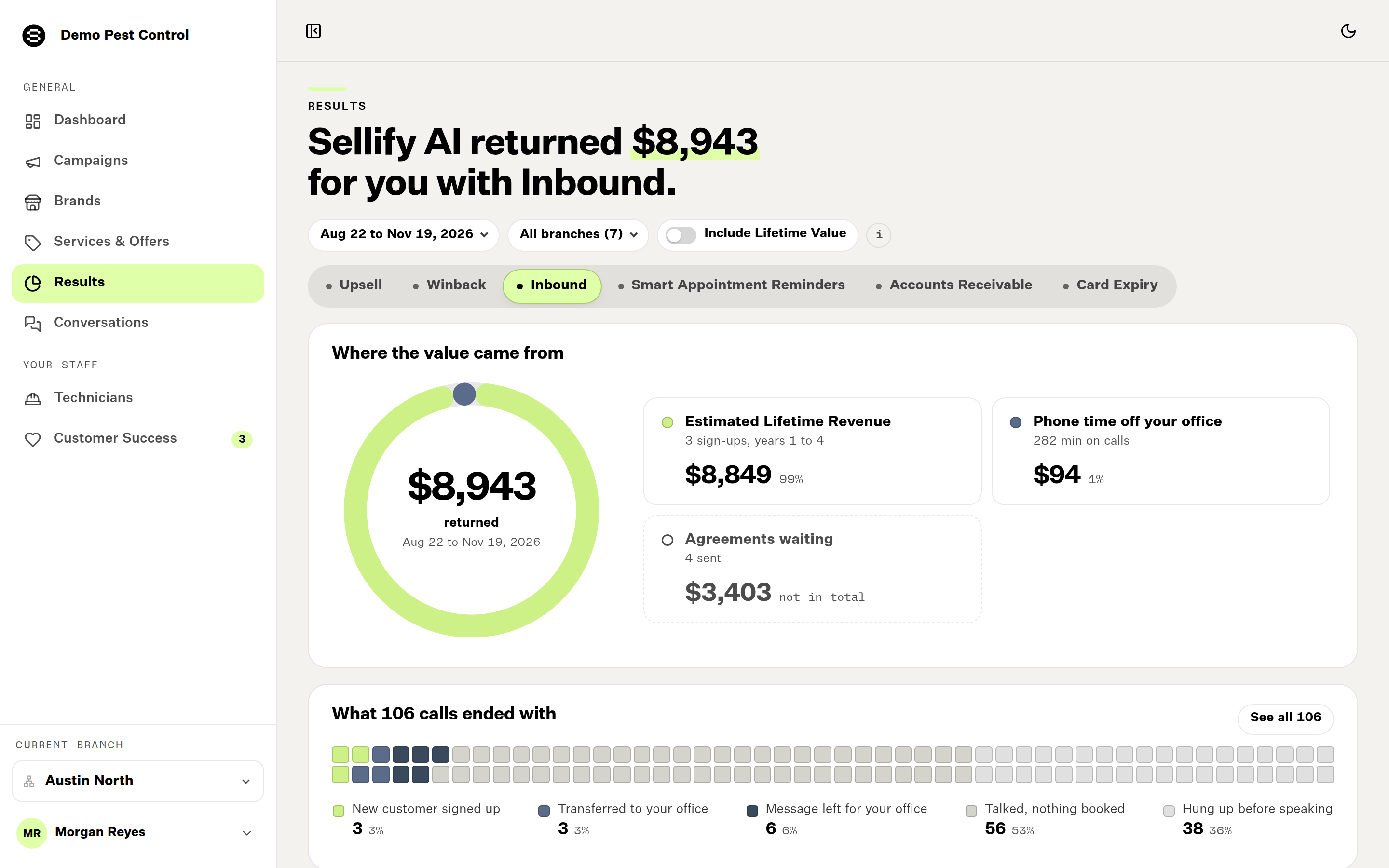
Answers your calls after hours and when the office is busy or short-staffed. New callers are quoted and booked; current customers get help or a person.
You set the hours a call can be transferred to a person under When calls reach your office, in Settings > Quiet hours. Each call's outcome shows in Results.
Updates
All product updates
A dated history of every Sellify AI release for clients, newest first and grouped by month: billing, campaigns, results, tasks, technicians and settings.
Sources
- Invoca (vendor): How much missed sales calls cost home services businesses
- Sellify AI product documentation